
Property Damage Claim Guide By State (PDF)
If you’ve been in an accident recently and you’re not sure whether the insurance offer is fair, whether you have a diminished value claim, or even what your rights are in your state, you’re not alone. Most people go through a property damage claim once or twice in their life. Insurance companies handle thousands of them every week. That gap shows up in the settlement.
We put together a free guide to close it.
What the guide covers
The Property Damage Claim Guide By State is a plain-English walkthrough of the two types of claims that come out of most accidents: total loss (ACV) and diminished value.
Total loss and ACV
If your car is totaled, the insurer pays Actual Cash Value, which is what your car was worth the day before the accident. That number is calculated using databases and formulas that insurers control. Knowing how it’s determined is the first step to knowing whether it’s accurate.
Diminished value
If your car was repaired, it’s worth less than it was before the accident, even with a clean repair. Most people don’t know they can claim that difference. Many states allow it. Some don’t. The guide tells you which category your state falls into and what the recoverable amount typically looks like.
Key terms you’ll encounter
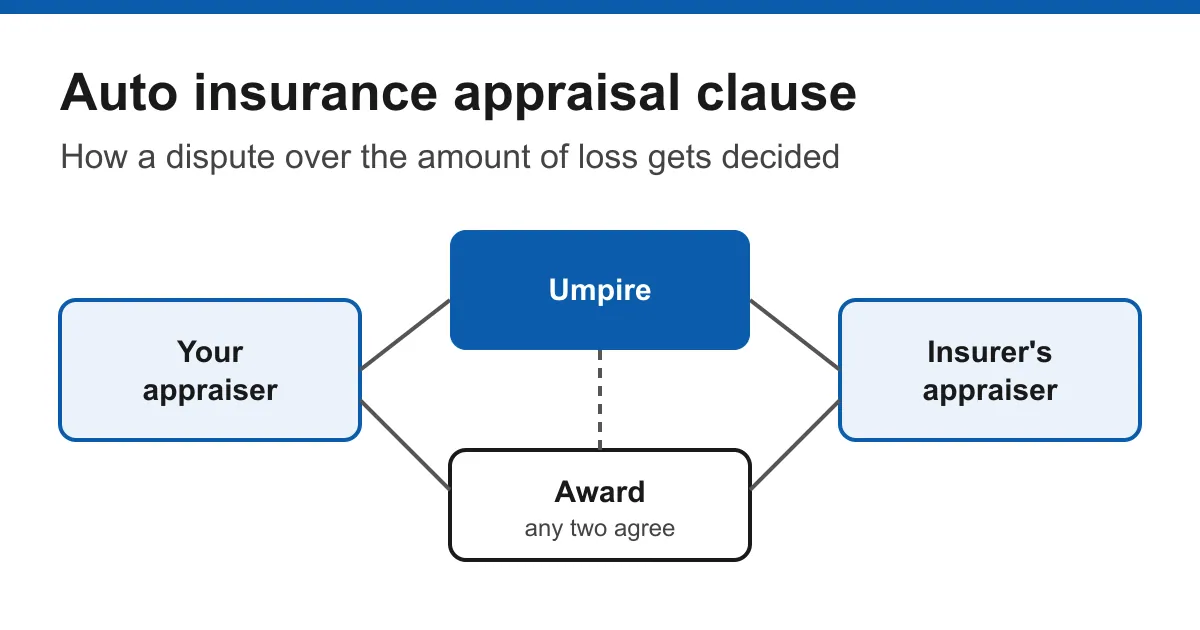
Appraisal clause, loss of use, USPAP, liability limits. The guide explains each one in plain English because insurers use this language to control conversations. Once you know what they mean, the process is a lot less opaque.
What you can recover, based on where you live
Property damage law varies by state. What’s recoverable in Georgia under the Mabry standard is different from what’s available in North Carolina or Texas. The guide accounts for that.
The claim checker
The guide includes an interactive claim checker. Answer a few questions about your situation: the type of accident, your state, your coverage, and whether the car was totaled or repaired. It tells you what type of claim you likely have, what’s recoverable where you live, and what the next steps are.
It takes about two minutes and costs nothing.
Why we built it
Most of the clients we hear from are in the same position. They got a number from their insurer, it felt low, but they didn’t know what to do with that feeling or whether it was even worth pushing back on.
The answer is usually yes, and usually by more than they expected.
We’re not in the business of running up claims. We’re in the business of getting the number right. Sometimes the insurer’s first offer is defensible. More often there’s something left on the table, whether that’s an ACV dispute, an unsubmitted diminished value claim, or an appraisal clause invocation the client didn’t know was available.
The guide gives you enough information to know which situation you’re in before you talk to anyone, including us.
Start here
If you’re dealing with a property damage claim right now, or if you’ve recently settled one and you’re not sure you got a fair result, start with the guide.
Property Damage Claim Guide By State
If the checker flags something worth looking at, or if you’d rather just have someone review the claim directly, we offer a free claim review with no obligation. You can reach us at appraisalengine.com or at (678) 805-4066.