
How ADAS Calibration Costs After a Collision Affect Your Diminished Value Claim
Your car got hit. The body shop fixed the bumper, replaced the sensors, and handed you back the keys. On paper, the repair looks complete. But if your vehicle has ADAS — Advanced Driver Assistance Systems — there is one more step that most drivers never hear about until it shows up on the invoice: calibration. And that calibration cost, which can run into the hundreds or even thousands of dollars, does not just affect your repair bill. It directly affects how much value your car loses after the accident.
What Is ADAS and Why Does It Need Calibration After a Collision
ADAS stands for Advanced Driver Assistance Systems. It is the umbrella term for the suite of sensors, cameras, radar units, and software that power features like automatic emergency braking, lane departure warning, adaptive cruise control, blind spot monitoring, and rear cross-traffic alerts. These systems are now standard on most new vehicles and increasingly common on used cars from the last five to seven years.
Every one of these systems depends on precise sensor positioning. When a collision occurs, even a low-speed impact can shift a camera mount by a few millimeters or alter the angle of a radar unit enough to compromise the entire system. A sensor that is off by a fraction of a degree may still appear to work but will fail to trigger in a real emergency.
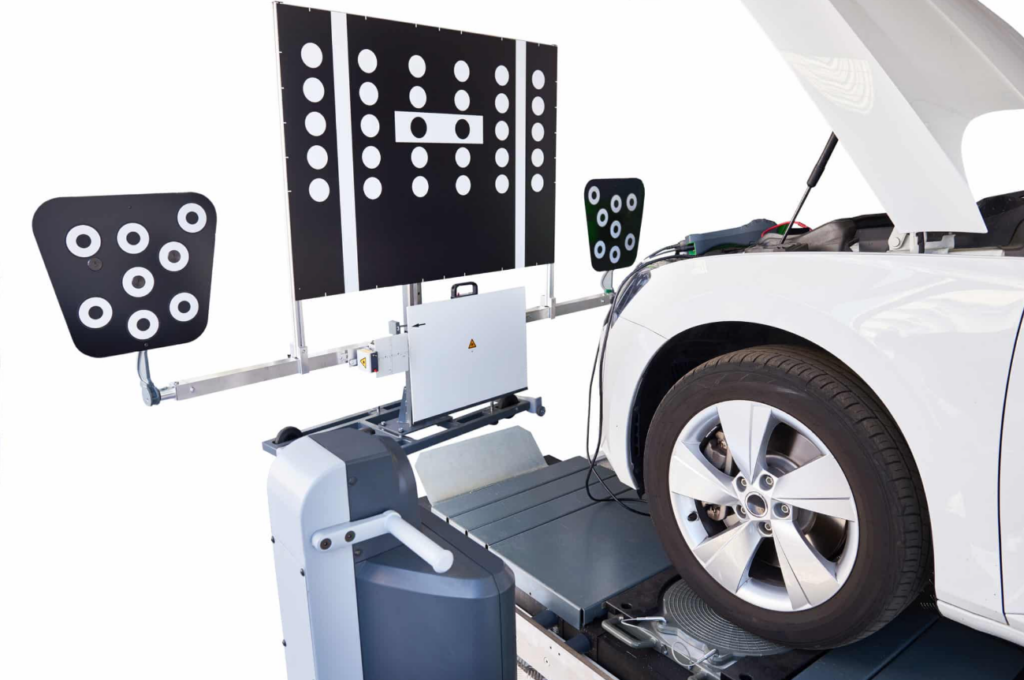
Calibration is the process of realigning these sensors to manufacturer specifications using specialized equipment. There are two types: static calibration, done in a controlled shop environment with targets placed at exact distances, and dynamic calibration, done by driving the vehicle under specific conditions so the system can recalibrate itself in motion. Many vehicles require both.
Important: ADAS calibration is not optional. If sensors are not properly recalibrated after a repair, the systems may fail silently — meaning the driver assumes they are protected when they are not. Insurance companies and body shops are increasingly required to document calibration as part of the repair record.
The Real Cost of ADAS Calibration and What Drives It Up
Calibration costs vary depending on the vehicle make, the number of sensors affected, and the type of calibration required. Here is a general breakdown of what drivers can expect:
| ADAS Component | Typical Calibration Cost | Notes |
|---|---|---|
| Forward-facing camera | $150 - $400 | Most common post-windshield or bumper repair |
| Radar / front collision sensor | $200 - $600 | Often triggered by front-end impacts |
| Blind spot sensors (per side) | $100 - $350 each | Rear quarter panel damage often triggers these |
| 360-degree surround camera system | $400 - $1,200+ | Common on luxury and newer SUV platforms |
| Full multi-sensor recalibration | $800 - $2,500+ | Moderate to severe collisions affecting multiple zones |
These numbers add up fast. A rear-end collision that looks like a $2,000 repair on the surface can easily become a $4,000 or $5,000 job once calibration is factored in. And that total repair cost is one of the primary inputs in calculating how much diminished value your vehicle has sustained.
The Direct Link Between ADAS Calibration Costs and Diminished Value
Diminished value is the difference between what your vehicle was worth before an accident and what it is worth after, even after all repairs have been completed. It exists because the market applies a stigma to vehicles with accident history, and that stigma shows up in resale and trade-in valuations regardless of how well the car was fixed.
ADAS calibration affects your diminished value claim in two distinct ways.
1. Higher Repair Totals Mean Higher Documented Damage
The repair bill is one of the most visible signals buyers and appraisers use to assess how serious an accident was. A vehicle with a $4,500 repair history carries a different market perception than one with a $1,800 repair, even if both look identical after the work is done. When calibration costs push your repair total higher, the documented damage on your vehicle history report reflects that, and your diminished value increases accordingly.
This is why repair estimates after a collision often miss the real financial impact. Body shops focus on restoring function. They are not in the business of telling you what that repair history will cost you at resale. That is the role of a professional appraisal.
2. ADAS-Equipped Vehicles Lose More Value Per Dollar of Damage
Vehicles with advanced technology systems are held to a higher standard in the used car market. Buyers of a late-model SUV with full ADAS capability are paying a premium precisely because those systems are intact and trustworthy. Once that vehicle has an accident on its record, especially one that involved sensor repairs and calibration, buyers discount it more aggressively than they would a basic trim without those features.
The logic is simple: the more sophisticated the technology, the higher the perceived risk of residual malfunction. Even with proper calibration documentation, a percentage of buyers will walk away from a vehicle with ADAS repair history, which depresses the effective market value. That depression is measurable, and it is exactly what a properly documented diminished value claim captures.
What Insurance Companies Won't Tell You About ADAS and Your Claim
Insurers routinely approve calibration costs as part of the repair claim because they have to. The liability exposure of approving a repair while denying calibration is too high. But approving the repair and acknowledging the full financial impact on your vehicle's market value are two very different things.
Most insurance adjusters will not proactively tell you that your ADAS-equipped vehicle has lost market value because of this claim. They settle the property damage, close the file, and move on. The diminished value loss, which in many states you are legally entitled to recover from the at-fault party's insurer, does not get raised unless you raise it.
Understanding how to spot a lowball settlement offer is the first step. The second is knowing that a settlement offer that covers repairs but ignores diminished value is, by definition, incomplete.
Worth knowing: In most U.S. states, you can file a separate diminished value claim against the at-fault driver's liability insurance after your vehicle has been repaired. The repair being completed does not close your right to pursue DV. The clock on that claim, however, is governed by your state's statute of limitations, so timing matters.
How to Protect Your Diminished Value Claim When ADAS Is Involved
If your vehicle has any ADAS features and was involved in a collision that triggered repairs or calibration, these steps will strengthen your position before, during, and after the claim process.
- Request itemized calibration documentation. Ask your body shop for a written breakdown of every sensor that was recalibrated, the method used (static or dynamic), and the cost. This documentation belongs in your claim file.
- Keep all repair invoices. Every line item on your repair bill contributes to the picture of documented damage. Do not discard or lose these after the repair is complete.
- Do not accept the first settlement offer as final. Property damage settlements and diminished value claims are separate. A check for repairs does not preclude a DV claim in most states.
- Get an independent appraisal before closing the claim. An independent appraiser can quantify the actual market value loss, including the impact of ADAS repair history, in a format that holds up with insurers and in court if necessary.
- Check your state's rules. Some states limit DV claims to third-party situations. If you were at fault or are filing under your own collision coverage, the rules vary. Understanding the basics of insurance claims and appraisals helps you navigate this without getting misled.
Which Vehicles Are Most Exposed to ADAS-Related Diminished Value
Not every vehicle faces the same level of exposure. The combination of ADAS density, vehicle segment, and market demand for condition-clean inventory determines how hard any specific car gets hit in resale after an accident with calibration work on the record.
The vehicles most at risk are those where buyers pay a meaningful premium for technology features and where the used market is competitive enough that buyers have options. That typically means:
- Late-model luxury sedans and SUVs with full sensor suites (BMW, Mercedes-Benz, Audi, Lexus, Genesis)
- Mid-size and full-size SUVs from mainstream brands with available or standard ADAS packages (Toyota, Honda, Ford, Chevrolet)
- Electric vehicles, where sensor integration is deeper and calibration requirements are more complex
- Pickup trucks in higher trim levels (Lariat, Limited, Platinum, Denali) where ADAS is part of the value proposition
If you own a vehicle in any of these categories and had ADAS-related repairs, the diminished value you are leaving on the table by not filing a claim is likely substantial. Diminished value loss varies significantly by vehicle segment, and higher-end vehicles consistently show the steepest post-accident depreciation.
The Bottom Line on ADAS Calibration and Your Vehicle's Value
ADAS calibration is not a minor line item. It is a signal that your vehicle sustained damage serious enough to compromise its sensor systems, and the market reads it that way whether you like it or not. The repair bill gets the car back on the road. It does not restore the market confidence that buyers place in a vehicle with a clean history.
The financial gap between what your car was worth before the accident and what it is worth now, with calibration and sensor repair in its history, is real and recoverable. But only if you take the steps to document it and claim it. A professional appraisal is not a formality. In cases involving ADAS repairs, it is often the difference between recovering thousands of dollars or walking away with nothing beyond the repair check.
Your Car Lost Value. You Can Recover It.
If your vehicle had ADAS sensors repaired or recalibrated after a collision, you likely have a diminished value claim worth pursuing. Get a professional appraisal from a team that handles these cases nationally.
Get Your Free QuoteFrequently Asked Questions
Does ADAS calibration always increase my diminished value claim?
Not automatically, but in most cases it contributes to a higher claim. Calibration adds to the documented repair total and signals to the market that sophisticated safety systems were affected by the accident. Vehicles with more extensive ADAS repair histories tend to be discounted more aggressively at resale, which translates into higher measurable diminished value.
Can I file a diminished value claim after the repair is already complete?
Yes. Diminished value claims are filed after repairs are complete, not before. The completed repair is actually a prerequisite, because DV represents the gap between pre-accident value and post-repair market value. You do not need to wait before repairs to preserve your right to file, but you should act before your state's statute of limitations runs out.
Will my insurance company tell me if I have a diminished value claim?
No. Insurers are not required to proactively inform you of your right to file a diminished value claim, and most will not do so voluntarily. You are responsible for identifying the loss and initiating the claim. This is precisely why an independent appraisal is valuable: it establishes the loss with documentation that the insurer has to contend with rather than dismiss.
How much diminished value can I expect from a collision that required ADAS calibration?
It depends on the vehicle's pre-accident value, the total repair cost including calibration, the vehicle segment, and the local market. A luxury SUV with $4,000 in repairs including full sensor recalibration can sustain $3,000 to $8,000 or more in diminished value. A basic sedan with a single sensor calibration will see a smaller impact. An independent appraisal is the only way to arrive at a defensible, vehicle-specific number.
Does it matter which ADAS sensors were affected?
Yes, to a degree. Front-facing cameras and radar units tied to automatic emergency braking tend to carry the highest market concern because they are directly associated with crash prevention. Calibration of these systems after an accident raises more red flags for buyers than, say, a parking sensor recalibration. The type and number of sensors involved should be documented precisely in your claim file.