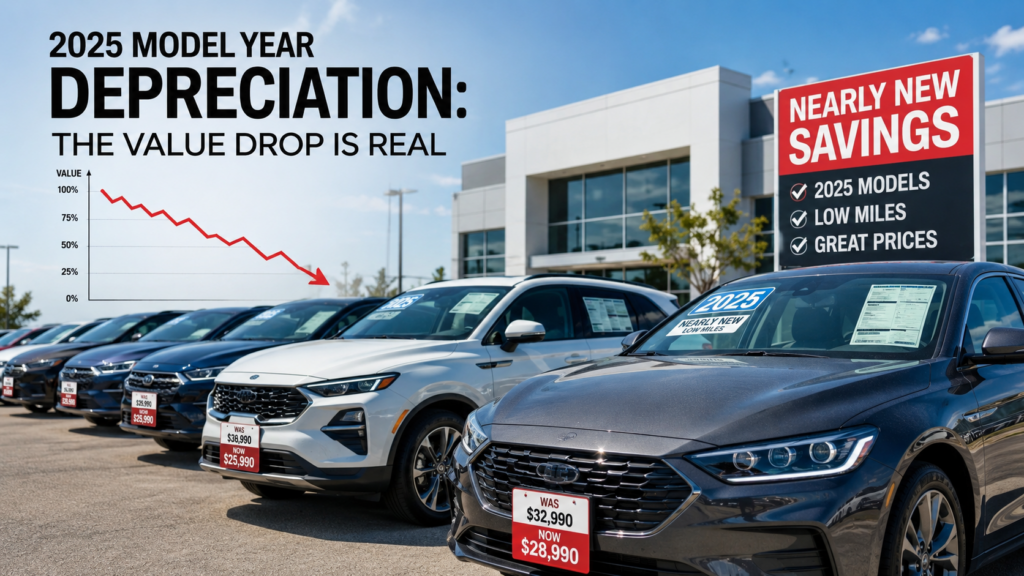

The average 2025 model year used vehicle is selling for $37,497. The average 2026 new vehicle is selling for $48,772. That $11,275 gap is the largest February price difference recorded since at least 2015, according to Edmunds shopper transaction data. For buyers, that is a genuine market opportunity. For owners who already have a nearly-new vehicle and are dealing with a collision, an insurance dispute, or a settlement negotiation, that same gap tells a very different story about nearly-new car depreciation and what it is doing to real-world appraisal values.
Why Nearly-New Cars Are Losing Value Faster Right Now
This is not a normal depreciation cycle. Two forces are compressing values on 1-year-old vehicles simultaneously, and both are structural rather than seasonal.
First, automakers have significantly increased new vehicle incentives in 2026. Manufacturer discounts and dealer incentives are widening the gap between MSRP and actual transaction prices on new cars. When a new 2026 model can be had for $3,000 to $5,000 below sticker, the competitive pressure on 1-year-old used vehicles intensifies. Buyers who can afford a new vehicle have less reason to settle for a used one at a marginal discount.
Second, supply is flooding back into the market. Rental fleets that purchased heavily during the inventory shortage years are now rotating vehicles out. Consumers who bought in 2024 and 2025 at elevated prices are trading in early, creating more competition among nearly-new inventory. More supply at lower prices means a 2025 model year vehicle that cost $45,000 new is now competing in a market where buyers have options at $37,000 or less.
What Accelerated Depreciation Does to an Appraisal
Vehicle appraisals, whether for insurance purposes, total loss disputes, or diminished value claims, are anchored to actual cash value: what the vehicle is worth in the current market at the time of the loss. When the market shifts quickly, as it has in 2026, that number can move faster than most owners expect.
Consider a driver who purchased a 2025 truck for $52,000 in mid-2025. They are now involved in a collision and the insurer is calculating a settlement offer. The insurer's valuation tool will pull comparable sales from the current market, where that truck may be trading in the $41,000 to $44,000 range due to current depreciation trends. The owner's mental anchor is $52,000. The insurer's ACV is $42,000. That gap is not negotiating room. It is the real market, accelerated by conditions the owner was not watching.
This is why understanding how to get a higher ACV from insurance requires knowing what the market is actually doing at the time of loss, not what you paid 12 months ago.
The Compounding Effect: Depreciation Plus Accident History
Accelerated depreciation is painful on its own. When a collision is added to the picture, the financial damage compounds.
A nearly-new vehicle that has already dropped 20% to 25% in value from market forces is now also carrying accident history. That history triggers an additional diminished value penalty on top of the market-driven loss. The combination creates a vehicle worth significantly less than either factor alone would suggest.
| Scenario | Estimated Value | Loss vs. Purchase Price |
|---|---|---|
| Original purchase price (2025) | $52,000 | Baseline |
| Current market value (no accident) | $42,000 | -$10,000 (market depreciation) |
| After collision repair (clean history) | $42,000 | -$10,000 (repairs restored condition) |
| After collision with accident history | $36,000–$38,000 | -$14,000 to -$16,000 (DV added) |
The diminished value loss represents the permanent reduction in market value that persists after repairs are complete. It is documented through a professional appraisal and is recoverable from the at-fault driver's insurer in most states. Our full breakdown of how to document a diminished value claim covers the process and evidence standards in detail.
How Insurers Are Using Market Conditions Against Claimants
Insurance adjusters are not sitting on the sidelines watching depreciation trends. Carriers with proprietary valuation systems like CCC One and Mitchell update their comparable data continuously. When nearly-new vehicle values drop across the board, those tools reflect it immediately in settlement calculations.
For claimants, this creates a specific risk: an insurer who uses current depressed market values to calculate ACV on a total loss, while simultaneously failing to account for what the vehicle was actually worth at the moment of impact. If depreciation accelerated sharply in the weeks or months before a loss, the insurer's retroactive application of current values can understate the pre-loss ACV.
This is a documented pattern, not speculation. Our analysis of how to spot lowball settlement offers walks through the specific flags to look for in a valuation report.
The effective counter is an independent appraisal that establishes what comparable vehicles were actually selling for at the time of loss, using real transaction data rather than algorithmic estimates that may lag the market or apply broad depreciation adjustments that do not reflect your specific vehicle's condition.
What Nearly-New Vehicle Owners Should Do Right Now
If you purchased a 2024 or 2025 model year vehicle in the past 18 months and are now dealing with a collision or insurance dispute, the market context matters to your outcome. Here is what to act on:
- Do not accept the first settlement offer without reviewing the comparables. Ask the insurer for the full valuation report showing which vehicles they used. Check those comparables yourself against current listings and recent sales in your region.
- Understand the difference between market depreciation and diminished value. Market depreciation is what happened to all 2025 vehicles. Diminished value is the additional penalty specific to your vehicle because of its accident history. Both are real losses, but only diminished value is directly recoverable from the at-fault insurer.
- Get an independent appraisal before accepting any total loss settlement. The insurer's number is their opening position, not a certified valuation. An independent appraiser working from real comparable sales can produce a defensible ACV figure that may differ significantly from the insurer's calculation.
- Document your vehicle's condition thoroughly before and after repairs. Photos, repair orders, ADAS calibration records, and alignment documentation all support a stronger diminished value claim. Our guide on why repair estimates often miss the real financial impact explains what gets left out of standard repair documentation.
The Used Car Market Is Not Recovering Fast: That Matters for Timing
Wholesale values have been softening throughout 2025 and into 2026 across most vehicle segments. The used vehicle depreciation data for 2026 shows that while values remain structurally elevated compared to pre-pandemic levels, the correction is ongoing and is hitting 1- to 3-year-old vehicles harder than older inventory.
For owners of nearly-new vehicles considering whether to file a diminished value claim, timing matters. The longer you wait after repairs are complete, the more the current market baseline shifts. A vehicle appraised today against today's comparables produces a clean, accurate picture of the loss at a specific point in time. That picture becomes harder to reconstruct accurately as months pass.
The practical takeaway: if your 2024 or 2025 vehicle was in an accident and has been repaired, file the diminished value claim now. The market will not wait.
Find Out What Your Nearly-New Vehicle Is Actually Worth
Depreciation is moving fast in 2026. If you have had a collision, do not let the insurer use shifting market values against you. Get a certified appraisal based on real data.
Get Your Free QuoteFrequently Asked Questions
Why are 1-year-old vehicles losing value so quickly in 2026?
Two compounding factors are driving it. Automakers have increased new vehicle incentives, making new cars more competitive with slightly used ones on price. At the same time, more nearly-new inventory is returning to market from rental fleet rotations and early trade-ins. The result is a larger-than-normal price gap between new and 1-year-old used vehicles.
How does accelerated depreciation affect an insurance settlement?
Insurance companies calculate actual cash value using current market comparables. When nearly-new vehicle values have dropped significantly since your purchase, the insurer's ACV calculation will reflect the current depressed market, not what you paid. That gap between your purchase price and the insurer's ACV is real and is one reason independent appraisals are worth pursuing before accepting any settlement.
Is diminished value recoverable on a nearly-new vehicle?
Yes, and the recovery potential is often higher on nearly-new vehicles because they had more market value to lose. Diminished value is the permanent reduction in resale value caused by accident history, separate from market depreciation. In most states you can file a diminished value claim against the at-fault driver's liability insurer. A professional appraisal establishes the dollar amount.
Does market depreciation affect a diminished value claim?
Market depreciation sets the baseline value of the vehicle at the time of loss. Diminished value is calculated as a percentage reduction from that baseline. So if the vehicle has already lost $10,000 in market value, the diminished value calculation starts from the current market value, not the original purchase price. Both losses are real, but only the diminished value portion is directly recoverable from a third-party insurer.
What should I do if the insurer's ACV offer seems too low on a recent model?
Request the full valuation report with all comparable vehicles used. Check those comparables against active listings and recent sales in your area. If the comparables are from a different region, different trim level, or higher mileage than your vehicle, they may be pulling the ACV down unfairly. An independent appraisal gives you a documented counterpoint with real local market data to support a dispute.