
Vehicle Maintenance
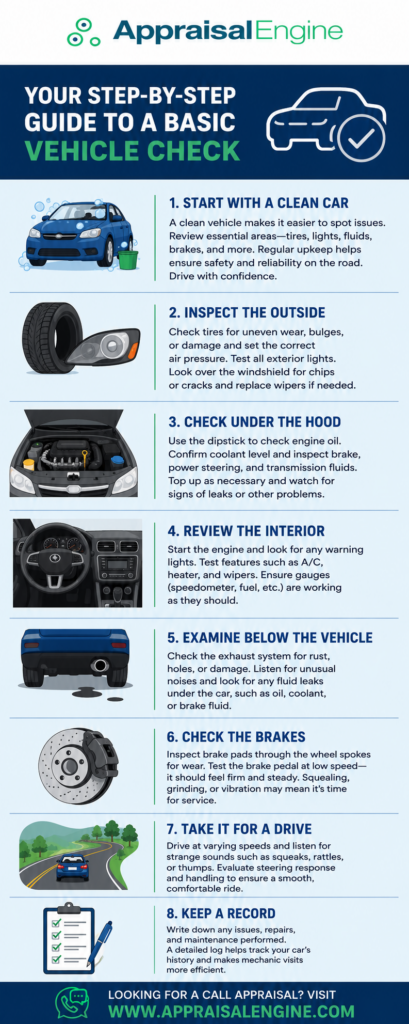
Your Step-by-Step Guide to a Basic Vehicle Check
Staying on top of routine inspections is one of the simplest ways to protect your vehicle’s value and avoid costly surprises. This checklist walks you through eight areas every driver should review regularly.
Start With a Clean Car
Before you inspect anything, wash the vehicle. Dirt hides scratches, rust spots, fluid stains, and body damage that are easy to miss on a grimy surface. A clean car also makes it easier to detect new leaks underneath. This step takes ten minutes and pays for itself the first time you catch something early.
Inspect the Outside
Walk around the vehicle and check each tire for uneven wear patterns, bulges, cuts, or embedded objects. Verify that tire pressure matches the manufacturer spec (usually found on the driver door jamb, not the tire sidewall). Test every exterior light, including turn signals and brake lights, and have someone stand behind the car while you press the pedal if you are alone. Check the windshield for chips or cracks that could spread, and swap out worn wiper blades before rain makes them a problem.
Check Under the Hood
With the engine cold, pull the oil dipstick, wipe it clean, reinsert it fully, and pull it again to read the level and color. Dark, gritty oil is overdue for a change. Check the coolant reservoir, brake fluid, power steering fluid, and transmission fluid against their marked MIN and MAX lines. If any reservoir is consistently low between checks, you likely have a leak worth investigating before it becomes a repair bill.
Review the Interior
Start the engine and let it idle. Watch the instrument cluster as it cycles through its self-test and note any warning lights that stay on. Run the A/C and heater to confirm both reach their target temperatures. Check that the speedometer, fuel gauge, and odometer read correctly. Test the horn, interior lights, and any powered features like windows and mirrors. A warning light is not always an emergency, but ignoring it long enough usually turns it into one.
Examine Below the Vehicle
Crouch down or use a flashlight to look under the car. Scan for fluid spots on the ground where the vehicle is parked. Inspect the exhaust system visually for rust, holes, or disconnected sections, and listen for unusual sounds when the engine is running. A drip of clear water near the tailpipe is normal condensation. Anything oily, green, red, or brown warrants a closer look from a mechanic.
Check the Brakes
Look through the wheel spokes to see the brake pads sitting against the rotor. Most pads have a wear indicator groove, and anything less than a quarter inch of material means replacement is coming soon. In a safe area, test the brake pedal at low speed. It should feel firm and consistent, not spongy, and the car should stop in a straight line. Squealing is the pad’s built-in wear warning. Grinding means metal is already contacting metal, which damages rotors and adds to the repair cost.
Take It for a Drive
A short test drive at varied speeds tells you more than a static inspection. Listen for squeaks, rattles, or thumps that appear at certain speeds or over bumps. Pay attention to steering: it should feel responsive and centered, with no pulling to one side. Notice how the transmission shifts and whether the engine hesitates under acceleration. Problems that only appear in motion are easy to miss in the driveway and easy to catch if you are paying attention.
Keep a Record
Write down what you checked, what you found, and any repairs or fluid top-offs performed. A maintenance log does two things: it helps your mechanic diagnose recurring issues faster, and it directly supports the resale and appraisal value of your vehicle. An undocumented repair history is a liability in any insurance dispute or private sale. A clear, dated log is an asset.