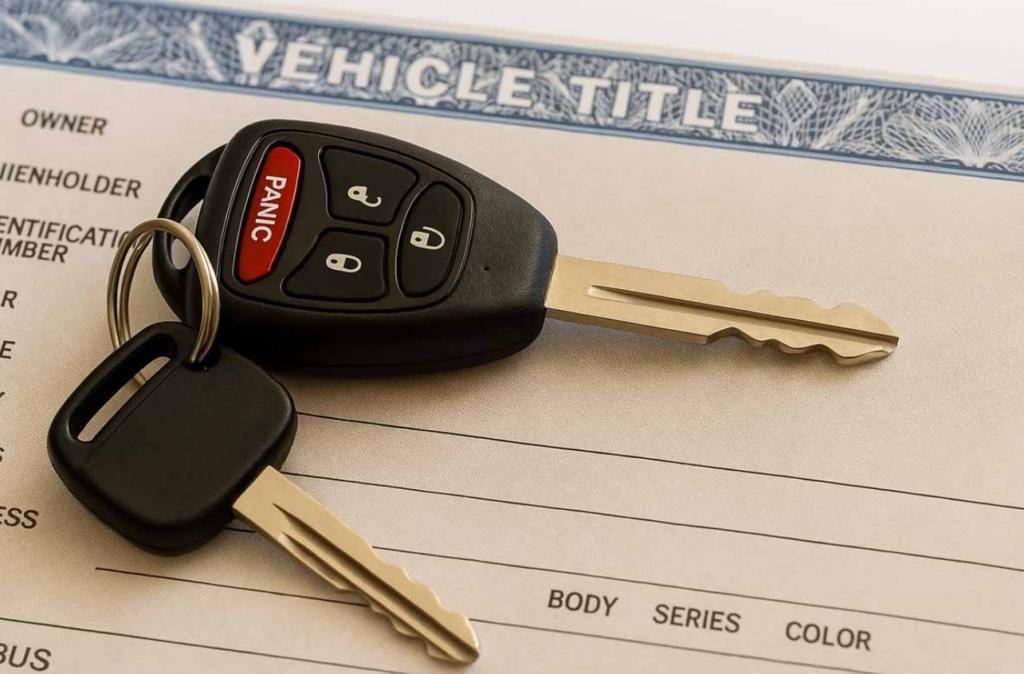

If your car was ever declared a total loss or severely damaged, two words are going to follow it around for the rest of its life on the road: salvage and rebuilt. Most drivers use them interchangeably, but they are not the same thing, and confusing them can cost you thousands of dollars, either when you try to sell, when you file an insurance claim, or when you simply need to know what your vehicle is actually worth.
What a Salvage Title Actually Means
A salvage title is issued by a state's department of motor vehicles when an insurance company declares a vehicle a total loss. That declaration happens when the cost to repair the vehicle exceeds a set percentage of its pre-accident market value. That threshold varies by state, typically ranging from 70% to 100% of the vehicle's actual cash value, but in every case the result is the same: the insurer takes ownership of the car, pays out the claim, and the vehicle gets branded.
Once a salvage title is on record, the vehicle cannot be legally driven on public roads in most states. It can be sold, parted out, auctioned, or repaired, but it cannot be registered for everyday use until it goes through a formal inspection and title conversion process.
The salvage brand does not go away. Even after repairs. Even after inspections. The vehicle history carries that record permanently, and any buyer, lender, or insurer who runs a VIN check will see it.
Key point: A salvage title means the vehicle has been written off by an insurer and is not roadworthy in its current condition. It is a legal status, not just a description of damage severity.
What a Rebuilt Title Means
A rebuilt title is what a salvage vehicle receives after it has been repaired and passed a state inspection. The process varies significantly by state. Some require thorough mechanical and structural inspections. Others require little more than paperwork. In either case, a rebuilt title indicates the vehicle was once a salvage and has since been restored to a driveable, legally registerable condition.
Here is where a lot of buyers and sellers get confused. A rebuilt title does not mean the vehicle is restored to its original condition or original value. It means the state has cleared it to be on the road again. The damage history is still there. The branding is still there. The market and insurers know it, and they price accordingly.
Important distinction: A rebuilt title vehicle is roadworthy. A salvage title vehicle is not. But neither one carries the same market value as a clean title vehicle with identical specs.
How Each Title Type Affects Your Vehicle's Market Value
The financial gap between a clean title and a salvage or rebuilt title is substantial. Depending on the vehicle's make, model, age, and condition, a salvage or rebuilt brand can reduce a vehicle's resale value by anywhere from 20% to 50% compared to a clean-title equivalent.
Here is a practical comparison of how title status affects value across key categories:
| Category | Clean Title | Rebuilt Title | Salvage Title |
|---|---|---|---|
| Resale Value | Full market value | 20%–40% below market | 50%+ below market |
| Insurance Availability | Full coverage available | Limited; some insurers decline | Usually liability only |
| Financing | Standard auto loans | Difficult; higher rates | Cash sales only in most cases |
| Buyer Pool | Broad market | Narrowed significantly | Dealers, rebuilders, parts buyers |
| Registration | Standard | Allowed after inspection | Not allowed (not roadworthy) |
The Insurance Problem With Salvage and Rebuilt Vehicles
Getting full coverage on a rebuilt title vehicle is genuinely difficult. Many major insurers will only offer liability coverage, meaning if the vehicle is damaged again in an accident, you are not getting a comprehensive or collision payout. Some specialty insurers will cover rebuilt title vehicles, but at a significantly higher premium and often with stated-value policies rather than actual cash value policies.
For salvage title vehicles, the situation is even more restrictive. Since the car is not legally roadworthy, standard coverage is typically unavailable entirely. If someone is driving an unrepaired salvage vehicle and gets into an accident, they are likely exposed with no recourse through their insurer.
This insurance gap is one of the primary reasons the value drop on these vehicles is so steep. Buyers are not just pricing in the damage history. They are pricing in the reduced insurability, the narrower buyer pool when they eventually resell, and the financing obstacles they will face.
Diminished Value and Title Branding: A Separate but Related Issue
It is worth being precise here because a lot of people conflate title branding with diminished value, and they are not the same thing.
Title branding happens when a vehicle is declared a total loss and the state issues a salvage designation. The car crossed a legal threshold defined by dollar amounts and state rules.
Diminished value affects vehicles that were repaired without being declared a total loss. The car kept its clean title, but the accident history still shows up on vehicle history reports and buyers discount the car at resale. That loss in market value is what diminished value claims are designed to recover.
A vehicle can experience both scenarios at different points in its life. If a car was in a minor accident, repaired, and kept a clean title, diminished value applies. If it was later totaled in a second accident, rebuilt, and sold again, the buyer of that rebuilt title vehicle is dealing with a different category of loss entirely.
Understanding which situation you are in matters a great deal for how you pursue compensation and what kind of appraisal or insurance claim strategy makes sense.
Should You Buy a Rebuilt Title Vehicle?
This question comes up constantly, and the answer depends entirely on your situation. There is no universal right or wrong. What matters is going in with clear eyes about what you are taking on.
- The price discount can be significant, sometimes making a rebuilt title vehicle genuinely attractive for a buyer who understands the risks and does not need to finance or carry full coverage.
- The quality of the rebuild matters enormously. A vehicle rebuilt by a reputable shop using OEM parts to manufacturer standards is in a very different situation than one reassembled quickly for auction resale. Get an independent inspection before purchasing.
- ADAS and structural repairs are not always fully documented. Modern vehicles have complex sensor systems that require precise calibration after any significant repair. ADAS calibration failures can create safety issues that are not obvious on a test drive.
- Resale will be harder. Even if you are fine holding the vehicle long-term, circumstances change. Know that selling a rebuilt title car will limit your buyer pool and likely require a further discount.
- Run the VIN. A full vehicle history report through NMVTIS-connected services or CARFAX will show prior title brands, insurance claims, and odometer records. Do not skip this step.
How a Professional Appraisal Fits Into This Picture
Whether you are buying, selling, insuring, or disputing a settlement on a salvage or rebuilt title vehicle, you need an accurate, documented valuation that reflects the vehicle's actual condition and market position, not a generic online estimate that ignores title history.
Online valuation tools often underweight or inconsistently apply title branding discounts. They are working from algorithms that may not reflect current market conditions in your region or the specific damage profile of your vehicle. An independent professional appraisal gives you a defensible number based on real comparable sales, current market data, and a thorough assessment of the vehicle's actual condition.
This matters most in three scenarios:
- Insurance disputes where the insurer's offer on a rebuilt title vehicle does not reflect actual market value
- Total loss negotiations where knowing the pre-loss value of your vehicle, including any prior title history, directly affects your settlement
- Pre-purchase inspections where you need an independent assessment of what a rebuilt title vehicle is actually worth before you commit to a price
If you are in any of these situations, a certified vehicle appraisal from a qualified appraiser is not an optional extra. It is the only way to get a number you can actually use in a negotiation.
For drivers dealing with a total loss claim specifically, understanding how actual cash value is calculated is a critical first step before accepting any settlement offer.
Not Sure What Your Vehicle Is Actually Worth?
Whether you have a clean title, rebuilt title, or are dealing with a total loss claim, Appraisal Engine gives you a certified, defensible valuation based on real market data. No guesswork.
Get Your Free QuotePrefer to read this offline or save it for later?
Download the PDF GuideFrequently Asked Questions
Can a salvage title ever become a clean title again?
No. Once a vehicle receives a salvage brand, that history is permanent in most U.S. states. Repairing the vehicle and passing a state inspection converts it to a rebuilt title, but it cannot be reclassified as a clean title. The damage history remains on record indefinitely.
How much value does a rebuilt title take off a car?
The discount varies by vehicle type, condition, and region, but rebuilt title vehicles typically sell for 20% to 40% below the market value of a comparable clean title vehicle. Luxury vehicles and newer models tend to see the steepest discounts because the buyer pool is more cautious and the financing and insurance hurdles are more pronounced.
Can I get full coverage insurance on a rebuilt title vehicle?
Some specialty insurers offer full coverage for rebuilt title vehicles, but it is not straightforward. Many standard carriers will only offer liability coverage. Expect higher premiums and a more limited selection of providers. Getting quotes from multiple insurers before purchasing a rebuilt title vehicle is advisable.
What is the difference between a salvage title and a branded title?
A branded title is an umbrella term that covers any title with a special designation beyond clean, including salvage, rebuilt, flood, hail, lemon law buyback, and others. A salvage title is one specific type of branded title. All salvage titles are branded, but not all branded titles are salvage.
Does a rebuilt title affect a diminished value claim?
A rebuilt title vehicle has already gone through the total loss and salvage process, so a standard diminished value claim does not apply in the same way. Diminished value claims are designed for vehicles that kept their clean titles after being repaired. If you have a clean title vehicle with accident history, documenting and filing a diminished value claim is the appropriate path.