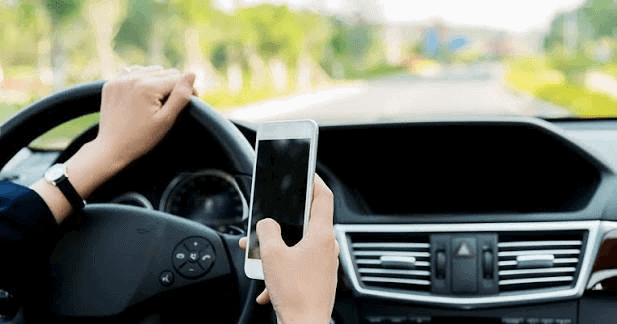

Distracted driving violations in the United States have surged 57% since 2022, according to the 2026 LexisNexis U.S. Auto Insurance Trends Report. That is not a slow creep. That is a structural shift in how many vehicles are being damaged on American roads every year, and it has a direct, measurable effect on what your car is worth after someone else’s moment of inattention puts it in a body shop. If you are trying to understand why distracted driving accidents reduce vehicle value in ways that persist long after the repairs are finished, the answer starts with how the market actually processes accident history.
The Numbers Behind the Surge
The LexisNexis data is worth sitting with for a moment. Distracted driving violations are up across every age group, not just younger drivers. Drivers aged 36 to 45 and those 66 and older saw increases exceeding 70%. The overall number of miles driven increased only 2% during the same period, which means this is a behavioral shift, not a function of more cars on the road.
Simultaneously, bodily injury claims now account for more than 26% of total insurance claims dollars, up from under 20% in 2022. That rise in severity tells you the collisions being caused by distracted drivers are not minor parking lot scrapes. They are the kind of impacts that trigger airbag deployment, structural repair, and the full cascade of consequences that follow a vehicle through its history report for the rest of its life.
The NHTSA estimates that roughly 660,000 drivers are using a handheld phone at any given daylight moment. Approximately 3,275 people were killed in distraction-affected crashes in 2023 alone, with another 324,000 injured. These are the collisions that generate the accident records, the repair invoices, and the Carfax entries that permanently alter a vehicle’s market position.
It Is Not Just Phones Anymore
One of the less discussed drivers of this trend is the technology built into the vehicles themselves. Modern infotainment touchscreens now control everything from climate and navigation to phone connectivity and media. Research consistently shows that interacting with these screens is as distracting as texting while driving, and in some cases more so. The AAA Foundation for Traffic Safety found that certain vehicle infotainment systems required up to 40 seconds of eyes-off-road interaction for common tasks.
Starting in 2026, Euro NCAP and ANCAP Safety in Australia and New Zealand have begun requiring physical controls for key functions in vehicles that want to achieve top safety ratings. That regulatory shift tells you the industry recognizes the problem. But the millions of vehicles already on the road with touchscreen-only interfaces are still generating accidents at an elevated rate, and those accidents are still creating diminished value losses that vehicle owners need to recover.
How a Single Accident Record Changes Your Vehicle’s Market Position
The moment an accident is reported and appears on a vehicle history report, the vehicle’s resale trajectory changes permanently. National Automobile Dealers Association data shows that vehicles lose 10% to 30% of their pre-accident value depending on severity, even after high-quality repairs. Minor cosmetic damage typically reduces value by 10% to 15%. Structural damage pushes losses to 25% or higher. Frame damage, airbag deployment, and major component replacement sit at the top of the scale.
Carfax data for 2026 shows the average retail price impact is just under $500 for a vehicle that has been in an accident, but that figure jumps to an average of $2,100 for vehicles that sustained severe damage. On higher-value vehicles, the dollar amounts scale accordingly. A $45,000 SUV losing 20% of its value to accident history represents a $9,000 loss the owner carries entirely if they do not file a diminished value claim.
The used car market does not care why the accident happened. It does not differentiate between a distracted driver rear-ending you at a stoplight and a multi-vehicle highway collision. It only sees the record, and it discounts accordingly.
The Insurance Cost Spiral Makes It Worse
Rising distracted driving rates are not happening in a vacuum. They are feeding a broader insurance cost spiral that affects every vehicle owner, including those whose cars were damaged by someone else’s negligence.
Consider how the chain works:
| Factor | What Is Happening | Impact on Vehicle Value |
|---|---|---|
| Distracted driving violations | Up 57% since 2022 | More vehicles entering market with accident history |
| Bodily injury claims share | Over 26% of total claims dollars | Higher severity collisions producing larger DV losses |
| Insurance premiums | Four consecutive years of rate increases | 56% of buyers now factor insurance cost into vehicle purchase |
| Policy shopping | 47% of policyholders shopped in 2025 | Coverage gaps during transitions can leave DV claims unfiled |
| Repair cost inflation | ADAS calibration, sensor replacement, labor rates rising | Higher repair bills push more vehicles toward total loss threshold |
When insurance becomes a deciding factor in vehicle purchase decisions for more than half of all consumers, the knock-on effect hits vehicles with accident history harder. A car that costs more to insure because of its damage record becomes less attractive to buyers, which reduces demand, which pushes the resale price down further. The distracted driving epidemic is accelerating this cycle.
ADAS Repairs Add Another Layer of Financial Loss
Vehicles built in the last several years are equipped with Advanced Driver Assistance Systems including automatic emergency braking, lane departure warning, blind-spot monitoring, and adaptive cruise control. These systems rely on cameras, radar units, and sensors that are often mounted in areas commonly damaged in collisions: front bumpers, windshields, side mirrors, and rear fascias.
When a distracted driver hits your car, even a seemingly moderate impact can damage or misalign these sensors. Proper repair requires not just replacing the physical hardware but recalibrating the entire system to manufacturer specifications. That calibration work is expensive, often adding $1,000 to $3,000 or more to the repair bill. Our analysis of ADAS calibration costs and their impact on diminished value claims covers how these expenses factor into your total loss calculation.
The repair cost matters for diminished value in two ways. First, higher repair costs push more vehicles past the total loss threshold. The current total loss frequency sits at record levels, driven in part by the expense of repairing sensor-equipped vehicles. Second, even when the vehicle is repaired rather than totaled, the complexity and cost of the repair signals to the market that the damage was significant, which deepens the diminished value loss.
The Wholesale Market Tells the Same Story
The Manheim Used Vehicle Value Index closed the first half of 2026 at 212.9, up 2.1% year over year and essentially flat from May. The market is stable, which is actually a problem for accident-history vehicles. In a rising market, the gap between clean-title and accident-history vehicles can narrow slightly because demand lifts all boats. In a stable or normalizing market, that gap holds firm or widens because buyers have options and no urgency to compromise.
The wholesale-to-retail pricing gap in 2026 is wide enough that dealers are already selective about which vehicles they take in. Accident history is one of the first filters applied. A car with a clean Carfax moves through the pipeline. A car with a reported collision sits longer, gets discounted more aggressively, or gets passed to a secondary auction channel altogether.
For individual owners, this dynamic means the diminished value loss from a distracted driving collision is not theoretical. It is priced into the market every single day, at every auction, every trade-in desk, and every private sale negotiation.
What You Should Do If a Distracted Driver Hit Your Vehicle
The process is the same regardless of how the accident happened, but understanding the distracted driving context gives you leverage in the claim. Here is what matters:
Document the other driver’s behavior. If you observed the other driver using a phone, eating, or looking at their screen, note it in the police report. Distracted driving is cited as a factor in 13% of all reported accidents, but many instances go unreported because no one thought to mention it at the scene. That documentation supports your liability argument.
Get the full repair accounting. Insist on a detailed line-item repair order that includes any ADAS recalibration, sensor replacement, structural work, and parts sourcing. The repair invoice is the foundation of any diminished value assessment. Vague or incomplete repair records give insurers room to minimize your claim.
Do not accept “repairs restore value” as an answer. Insurance adjusters routinely argue that quality repairs eliminate diminished value. That argument has been debunked repeatedly. The market does not agree with it. Buyers discount accident-history vehicles regardless of repair quality, and every data point in the used car market confirms this.
Get an independent appraisal. The at-fault driver’s insurer will either ignore your diminished value claim, lowball it, or apply their own formula that undervalues the loss. An independent professional appraisal based on real comparable sales and current market data gives you a defensible number that changes the negotiation entirely.
The Bigger Picture for Vehicle Owners in 2026
The distracted driving epidemic is not going to reverse itself overnight. The technology that contributes to it, both handheld devices and in-vehicle touchscreens, is embedded in how people drive. Regulatory changes like hands-free laws and the Euro NCAP physical controls requirement may help at the margins, but the installed base of touchscreen-heavy vehicles is already massive and growing.
What this means for vehicle owners is straightforward: the probability that your car will be hit by a distracted driver is higher than it was four years ago. The financial consequences of that collision, measured in diminished value, are real and recoverable if you take the right steps. Understanding the current state of the auto market and how these trends intersect with your vehicle’s value is the first step toward protecting yourself financially.
The collision itself is something you cannot control. What happens afterward, whether you recover the full financial impact or absorb it silently, is entirely in your hands.
Hit by a Distracted Driver? Your Car Lost More Than the Repair Bill Covers.
Get a free claim review from Appraisal Engine and find out what your vehicle’s diminished value is actually worth. No commitment. Real numbers backed by real market data.
Download this article as a PDF for your records or to share with your insurance adjuster.
Frequently Asked Questions
Does it matter for my diminished value claim that the other driver was distracted?
The cause of the accident does not change the diminished value calculation itself, which is based on the market impact of the accident history and repair record. However, documentation showing the other driver was distracted strengthens your liability argument, which matters if fault is disputed. A clear fault determination is the foundation of any third-party diminished value claim.
How much value does my car lose after being hit by a distracted driver?
The loss depends on the vehicle’s make, model, year, mileage, pre-accident condition, and the extent of the damage. Industry data shows vehicles typically lose 10% to 30% of their pre-accident value, with structural damage and airbag deployment pushing losses to the higher end. A professional appraisal is the only way to determine the specific dollar amount for your vehicle.
Can I file a diminished value claim if the at-fault driver was cited for distracted driving?
Yes. A distracted driving citation strengthens your position on fault, which is a prerequisite for filing a third-party diminished value claim against the at-fault driver’s insurance. The citation does not change what you are owed, but it makes the liability portion of the claim harder for the insurer to contest.
Are distracted driving accidents more likely to total my car?
Not inherently, but the trend is relevant. Higher-severity collisions are becoming more common as distracted driving violations rise, and the cost of repairing modern sensor-equipped vehicles continues to climb. Both factors push more vehicles past the total loss threshold. Total loss frequency hit record levels recently, driven in part by repair cost inflation and ADAS complexity.
Does my insurance premium go up if a distracted driver hits me?
In most states, your rates should not increase for a not-at-fault accident. However, the broader trend of rising insurance costs driven by distracted driving claims does affect premium pricing across the market. The 2026 LexisNexis report found that 47% of policyholders shopped their insurance in the past year, largely in response to four consecutive years of rate increases driven by exactly these trends.