
Nearly one in four vehicles involved in a claim is now declared a total loss instead of being repaired. Crashes did not suddenly get more severe. The math behind the decision changed. Rising auto repair costs are pushing more cars into total loss territory, and the threshold that separates a repair from a write-off is far more sensitive than most drivers assume. A few hundred dollars in added parts or sensor calibration can be the line between getting your car back and getting a settlement check, and that single shift can reshape what you are owed.
What a Total Loss Threshold Actually Is
A total loss is not a judgment about whether your car can be driven again. It is a financial calculation. When the estimated cost to repair a vehicle reaches a set percentage of its actual cash value, the insurer declares it a total loss and pays the value of the car instead of fixing it.
That percentage is the total loss threshold, and it is set state by state. Some states use a fixed figure, often somewhere between 70 and 80 percent of the vehicle's pre-loss value. Others use a total loss formula that adds the repair cost to the salvage value and compares the result to the actual cash value. Either way, the closer your repair estimate sits to that line, the more a small increase matters. Our partner site Total Loss Appraisals lays out the total loss threshold for every state so you can see exactly where your vehicle stands.
Why Repair Costs Are Climbing in 2026
Three forces are pushing repair estimates up at the same time, and each one independently nudges more borderline vehicles over the line.
- Tariffs on imported parts. A 25 percent tariff on imported vehicles and parts is now in effect. A large share of the replacement components used in U.S. collision repair come from Mexico, Canada, and China. Industry analysts note it typically takes 12 to 18 months for new cost structures to work fully through claims pricing, so the full impact is still building through 2026.
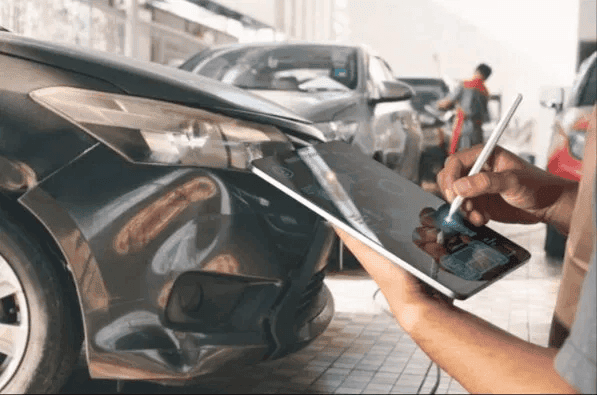
- Sensor calibration. Advanced driver assistance systems mean even routine repairs now trigger calibration work. National claims data shows calibrations appeared on roughly 28 percent of repairable estimates recently, up from about 22 percent a year earlier. Each calibration commonly adds 350 to 500 dollars to the bill.
- Labor and diagnostics. Shops are charging more for skilled labor and for the scanning and diagnostic steps modern vehicles require before and after a repair. The average total cost of repair now sits close to 4,800 dollars per claim.
Stack those together and the result is predictable. A claims platform that processes hundreds of millions of transactions reported total loss frequency reaching a record 23.1 percent of all claims in 2025. The decision to repair or write off is tipping toward write-off more often, and cost is the main reason.
How a Higher Repair Bill Flips a Borderline Car
Consider a vehicle with an actual cash value of 9,000 dollars in a state with a 75 percent threshold. The cutoff is 6,750 dollars. Watch how quickly normal cost pressure crosses it.
| Scenario | Repair Estimate | % of 9,000 ACV | Outcome (75% threshold) |
|---|---|---|---|
| Initial estimate | $6,400 | 71% | Repairable |
| After one ADAS calibration (+$450) | $6,850 | 76% | Total loss |
| After supplement for hidden damage (+$900) | $7,300 | 81% | Total loss |
The damage to the car never changed. The estimate did. That is the whole point. The same crash produces a different outcome depending on how much the parts and calibration cost on the day the estimate is written.
The Aging Fleet Makes It Worse
There is a second structural reason total losses keep setting records. The U.S. vehicle fleet is older than it has been in years. National data shows there are roughly 12 million fewer vehicles six years old or newer on the road compared to 2020, and more than 70 percent of total loss valuations are now for vehicles seven years or older.
Older cars carry lower actual cash values. When the value of the car is low and the repair bill is climbing, it takes far less damage to cross the threshold. A bumper, a sensor, and a quarter panel on a ten-year-old sedan can total it, while the same damage on a newer version of that same car would be repaired without a second thought.
What This Means for Your Settlement
Here is where it stops being an industry trend and starts being your money. When repair inflation pushes your car into total loss, or leaves it just barely repairable, you face one of two outcomes. Both are easy for an insurer to underpay.
If Your Car Is Totaled
The insurer owes you the actual cash value of the vehicle, the amount it would take to replace it with a comparable car right before the loss. The problem is that the valuation tools insurers rely on do not always reflect what comparable vehicles are actually selling for in your local market. Three-year-old used vehicles were near record prices in early 2026, yet plenty of settlement offers lag the real market. If the offer is built on soft comparables or unexplained condition adjustments, you can be left short by thousands. Our breakdown of how nearly-new depreciation affects your vehicle's value explains why the gap between book value and market value matters so much right now.
If Your Car Is Repaired
Plenty of vehicles land just under the threshold and get fixed. That is not a clean outcome either. A car with a documented accident history and significant repairs loses market value the moment the work is recorded, even when the repair is excellent. That loss is called diminished value, and it is a claim separate from the repair itself. The more extensive the repair, the larger the diminished value, and rising repair costs mean more extensive repairs across the board. Our analysis of diminished value loss by vehicle segment shows how sharply that loss varies by the type of car you drive.
How an Independent Appraisal Protects You
An insurer's valuation is produced by software the insurer pays for. That does not make it fraudulent, but it does make it one-sided. An independent appraisal gives you a defensible number built on real comparable sales and an honest assessment of your vehicle's condition and history.
On a total loss, that means documenting the true actual cash value so you can challenge a low offer with evidence instead of frustration. On a repaired vehicle, it means quantifying the diminished value in a report an adjuster cannot wave away. For drivers tracking regional market shifts, our look at 2026 used car price drops and diminished value shows how local value movement feeds straight into these numbers. In a market where a single calibration line can decide whether you are repaired or written off, the difference between accepting the first number and proving the right one is real money.
Think Your Settlement Misses the Mark?
Whether your vehicle was totaled or repaired, Appraisal Engine delivers a certified, defensible valuation built on real market data. Find out what you are actually owed before you accept an offer.
Get Your Free QuotePrefer to read this offline or share it with your adjuster? Download the full article as a PDF.
Download the PDFFrequently Asked Questions
What is a total loss threshold and how is it calculated?
It is the point at which an insurer decides repairing your car costs too much relative to its value. Most states either use a fixed percentage of actual cash value, commonly 70 to 80 percent, or a total loss formula that adds repair cost and salvage value together and compares that to the value of the car. Once the repair estimate crosses the line, the vehicle is written off.
Why are repair costs rising so fast in 2026?
Three pressures are hitting at once: a 25 percent tariff on imported vehicles and parts, the spread of sensor calibration requirements that add 350 to 500 dollars per calibration, and higher labor and diagnostic charges. The tariff impact in particular is still working its way through claims pricing and is expected to keep building through the year.
If my car is totaled because of high repair costs, can I still dispute the value?
Yes. The total loss decision and the settlement amount are two different things. Even if your car was correctly written off, the actual cash value the insurer offers can still be too low. An independent appraisal gives you comparable sales and condition documentation to push back on a soft offer.
Does a higher repair estimate affect my diminished value claim if the car is repaired?
It can. More extensive and more expensive repairs generally mean a larger drop in resale value, because the accident history and the scope of the work are what buyers react to. A documented appraisal translates that loss into a specific dollar figure you can claim.
Do tariffs really change whether my car gets totaled?
For borderline cases, yes. When a vehicle sits just under the threshold, a higher parts bill driven by tariffs can be enough to tip the estimate over the line. That effect is strongest on older, lower-value vehicles where the threshold dollar amount is already small.