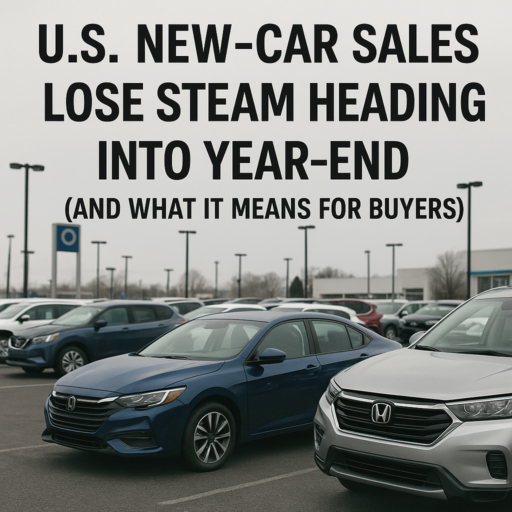

As 2025 winds down, the U.S. new-vehicle market is showing clear signs of fatigue. Shoppers are still buying, but the tone has shifted: affordability is the priority, interest rates remain a hurdle, and the electric vehicle (EV) segment continues to cool after key incentives changed.
The result? A slower market overall, with momentum concentrating in hybrids, value-priced models, and the right-size SUVs that fit family budgets.
November 2025: Sales Dip as Price Sensitivity Takes Over
Industry data points to a weaker November compared with the same month last year. Even after accounting for differences in selling days, demand softened—marking the second straight month of cooling.
That lines up with what many consumers are experiencing in real life: higher monthly payments, higher insurance costs, and tighter budgets. When payments stretch too far, buyers either delay purchases or choose lower-cost trims and powertrains.
Jessica Caldwell of Edmunds summed up the mood well: people are deal-hunting, and the brands with more affordable offerings are benefiting most.
EV Demand Continues to Slide, While Hybrids Gain Favor
One of the clearest themes from late 2025 has been the continued pullback in EV sales. Many EV models have posted meaningful declines, extending a trend that’s been building throughout the year.
Meanwhile, automakers have responded quickly by leaning into:
Hybrids, which offer fuel savings without charging concerns
Traditional gas models, especially in popular SUV categories
Lower-priced trims, where monthly payments feel more manageable
In other words, manufacturers are adjusting product mix to match what buyers are actually willing to pay right now.
Where Shoppers Are Buying: Smaller and Midsize SUVs Hold Up Best
While some segments are struggling, smaller and midsize non-luxury utility vehicles performed relatively well in November. Market share in these categories increased, while share for large pickups declined.
That’s not surprising: a “right-sized” SUV often hits the sweet spot of:
family practicality
manageable fuel costs
lower purchase price than full-size trucks
easier financing compared to top-trim vehicles
Brand Check: Who Gained, Who Slipped
Toyota and Kia: Modest Gains on the Back of Strong Lineups
Some automakers managed to post small increases, helped by demand for hybrids and more accessible pricing.
Toyota posted a modest gain overall, with strength concentrated in the Toyota brand even as Lexus cooled.
Kia also grew slightly, supported by strong performance from several core models even while some of its EVs declined sharply.
Kia has also been positioning itself for 2026 with upcoming product updates and a growing hybrid mix—an important strategy if the market continues to favor electrified options that don’t require full EV ownership.
Ford, Honda, and Others: Mixed Results and Headwinds
Ford saw a slight overall decline, but the bigger story was a steep drop in EV volume—while hybrids grew.
Honda reported a larger decline, citing supply constraints tied to semiconductor availability, which affected output and inventory.
Several other brands posted declines as well, reflecting a market that’s increasingly selective: the right vehicles sell, and the rest sit longer.
Inventory Is Higher Than Last Year (And That Can Help Buyers)
The good news for shoppers: inventory levels are generally healthier than they were during the worst post-pandemic shortages.
Industry estimates show inventory rising year-over-year, increasing the overall days’ supply. Some brands still have tight stock, but more automakers now carry high supply levels—often 100+ days—meaning dealers may be more motivated to negotiate.
That matters because when inventory rises, you tend to see:
more incentives
more dealer flexibility
better availability of trims/colors
less pressure to “buy today or lose it”
Incentives Are in Play—And December Could Be Strong

Automakers leaned into promotions as the holiday season ramped up. Incentive levels increased from October, creating “runway” for a stronger December finish.
If you’re shopping late in the year, this is typically the window where:
manufacturers push volume targets
dealers want to close the year strong
pricing becomes more competitive on in-stock vehicles
Forecasts still suggest 2025 could land around the mid–16 million unit range, a respectable outcome considering the year’s affordability pressure and shifting EV demand.
Practical Takeaways (Especially If You’re Buying or Negotiating)
If you’re in the market right now, here’s what this environment suggests:
You’ll likely find better leverage on high-inventory brands/models.
Hybrids remain in demand, so discounts may be thinner there than on slower-selling EVs or certain trims.
Monthly payment sensitivity is driving decisions, so focus negotiations on out-the-door price, APR, and fees—not just MSRP.
If you’re trading in, remember that new-car incentives and higher inventory can affect used values, so timing and documentation matter.
Where AppraisalEngine.com Fits In
When incentives rise and pricing swings, buyers often focus on the deal—but what happens after purchase matters too. If you’re involved in a collision later, the vehicle’s history can affect resale value in ways that don’t show up on a repair invoice.
At Appraisal Engine, we help vehicle owners and professionals document and quantify value impacts with clear, defensible appraisal support—especially when market conditions are changing and comparables are moving.